
The Operating System Behind the Clinic: Designing Clinic Operations as One Connected System
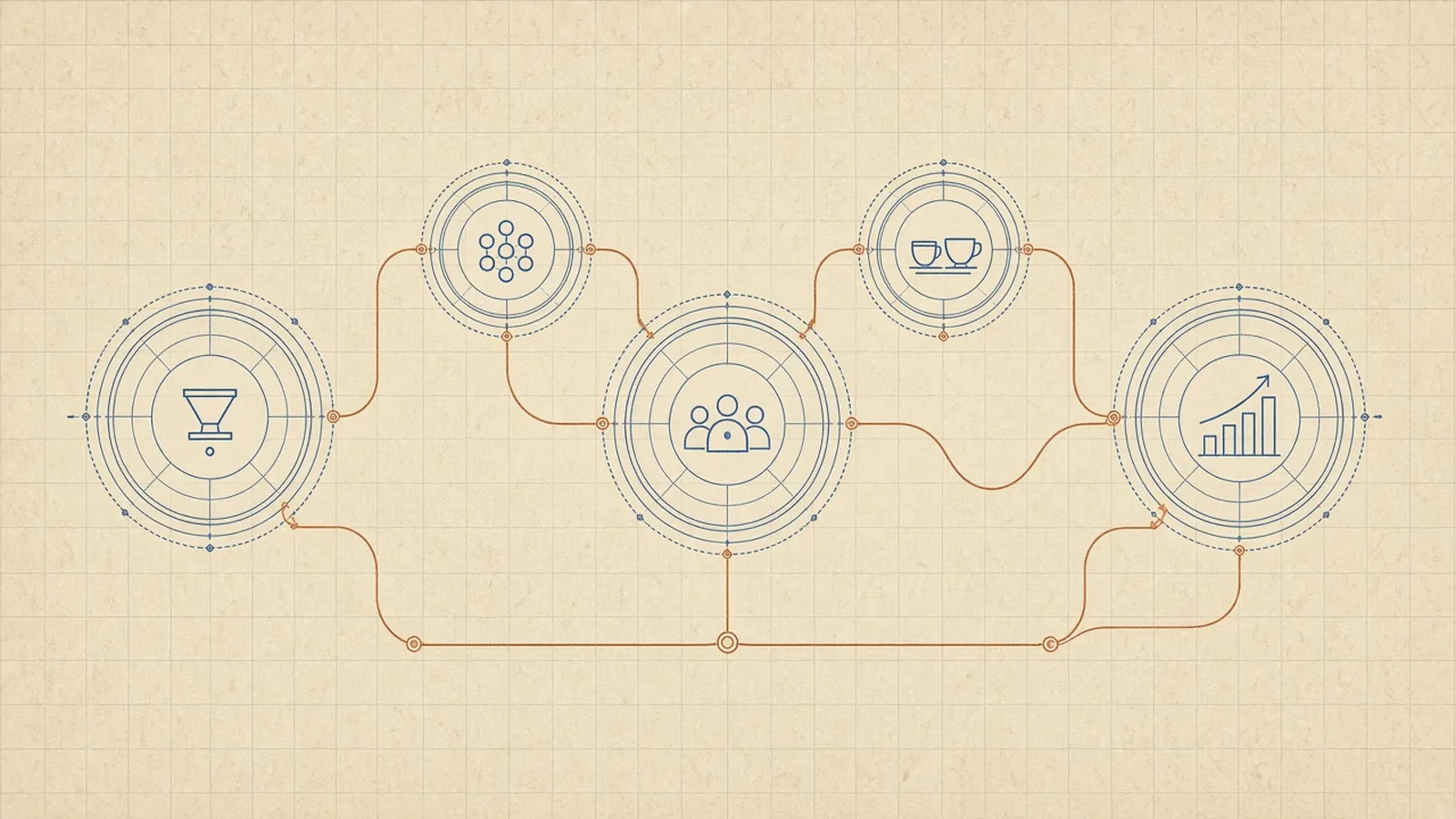
Every clinic runs on an operating system, whether or not anyone designed it. We believe most clinic problems aren't people problems. They're design problems.
It's the set of rules, habits, tools and handoffs that decide what happens when a patient calls, when a clinician runs late, when a claim is denied or when a medical assistant calls in sick. In a well-run clinic, that operating system is visible: written down, owned and improved. In a struggling one, it lives in a few experienced people's heads, and everyone else learns it by getting it wrong.
When I was a surgeon, I learned that the case doesn't start at the incision. It starts with the referral, the history, the imaging and the plan, and it ends long after the patient leaves the building. Clinic operations work the same way. The visit is the visible part. The system around it determines whether the visit goes well.
This article describes how we design that system at Won Health Architects, in six connected parts. It's written for physician groups, specialty clinic platforms and the MSOs that support them.
Why "operations" fails when it's treated as departments
This mistake is built into most clinic org charts. Clinics organize operations by department: front desk, clinical staff, billing, management. Each department optimizes its own work. The problems show up in the gaps between them.
A scheduling decision made at the front desk creates a documentation problem for the clinician and a denial for billing three weeks later. A staffing gap in the morning becomes overtime in the afternoon and a backlog of unsigned notes by Friday. No single department caused it, so no single department owns the fix.
If it depends on who picks up the phone, it's a design problem, not a people problem.
Designing operations as one system means following the patient, and the information about the patient, across those gaps.
1. Intake: the front door
Intake is where the operating system starts, and a surprising share of downstream problems begin there. A well-designed intake does four jobs:
- Routes the patient to the right service and clinician the first time. That requires written routing rules, not tribal knowledge.
- Captures information once. Demographics, reason for visit, referral source, records and insurance are collected in a way that downstream teams can trust, so no one asks for them again.
- Verifies eligibility and benefits before the visit, not at the counter.
- Sets expectations: what to bring, how long the visit will take and what happens next.
We measure intake by a few simple, consistently defined measures: time from first contact to first appointment, how often appointments are rebooked because of routing errors, and how often required information is missing at check-in.
2. Scheduling: capacity by design
Scheduling is where clinical logic meets operational reality. A good scheduling design reflects how clinicians actually work: realistic visit lengths by visit type, room and equipment constraints, and the mix of new and returning patients that keeps a day sustainable.
The common failure is a scheduling template that was set up once and never revisited, while the clinic's services, staff and patient mix changed around it. Templates should be reviewed on a regular rhythm with the physicians whose days they shape. Clinical judgment stays with clinicians; the schedule exists to support it.
3. Staffing: roles before headcount
Most clinics call staffing a headcount problem. It's a role problem. When responsibilities aren't clearly defined, people duplicate some tasks and drop others, and adding headcount just adds more people to the confusion.
We start by writing down the roles a site needs, what each role owns, and how coverage works when someone is out. Then we define a staffing model by site type, so a new location doesn't invent its own. Cross-training is designed in deliberately rather than discovered in an emergency.
4. Revenue cycle: designed from the first call
Most clinics treat revenue cycle as a back-office function. That's a mistake. Much of it is decided at the front of the clinic: whether the right insurance was captured, whether benefits were verified, whether the visit was scheduled and documented as the right type, and whether the clinician's documentation supports what was provided.
That's why we design revenue-cycle workflows alongside intake and scheduling, not after them. The goals are simple to state: be paid correctly, be paid on time, and be able to explain every dollar. Billing and coding practices should be reviewed regularly with qualified compliance professionals. Any arrangement that touches referrals or payments between parties needs experienced healthcare counsel, brought in early. A revenue cycle that's accurate and explainable is a sign of a healthy operating system; one that depends on heroics at month-end is a sign of a fragile one.
5. Technology: workflow first
Technology should follow workflow, not the other way around. Many clinics choose an EHR or practice-management system, then reshape their operations around its default settings. The result is a system that technically works and practically frustrates everyone.
We define the workflow first: who does what, in what order, with what information. Then we configure the tools (EHR, practice management, scheduling, patient communication and reporting) to support it, and configure them the same way at every site. Shared configuration is what makes shared reporting possible.
6. Reporting: same definitions, clear owners
A clinic dashboard should answer a short set of questions every week:
- Access: can patients get in?
- Throughput: does the day run on time?
- Experience and quality: is care going well?
- Team: are we staffed sustainably?
- Revenue cycle: are we paid correctly and on time?
Each metric needs one written definition, used everywhere, and one owner who acts when it moves. Without shared definitions, comparisons between sites are fiction. Without owners, metrics are just decoration.
The point of a dashboard isn't to watch. It's to decide.
The habits that hold it together
A designed operating system still needs habits to keep it working. Some of the best ones were invented in the operating room.
The daily huddle. Before surgery, the team briefs: who's here, what's planned, what could go wrong. A ten-minute clinic huddle does the same job: today's schedule, staffing gaps, known risks and anything left over from yesterday.
The checklist. Every new site, service line or system change should go live from the same written checklist. Checklists don't replace judgment; they protect it, by making sure the routine steps don't depend on memory.
One owner per process. If two people own a process, no one does. Every workflow in the operating system should have a named owner who is accountable for how it performs and empowered to improve it.
The debrief. After every launch, and after every significant problem, the team reviews what worked, what didn't and what changes. Then the change gets written into the system, not just remembered.
Small problems in the operating room rarely stay small. The same is true in a clinic.
None of these habits is expensive. They just have to be designed in.
Where to start
If you're looking at your own clinic's operations, start with three questions:
- Does a patient reach the right service the first time? Walk through intake and scheduling as a patient would. Note every point where the answer is "it depends."
- Is information captured once and trusted downstream? Follow one patient's information from first call to final payment. Count how many times someone re-enters or re-asks for it.
- Does every process have an owner? List your core workflows and write a name next to each. The blanks are your priorities.
The answers will point to a handful of design changes that matter far more than any new tool or additional hire.
Operations as care
It's easy to treat operations as the administrative side of healthcare, separate from the real work. I see it differently. When intake routes a patient correctly, when the schedule respects how clinicians practice, when billing is accurate and explainable, the patient experiences that as better care, even if they never see the system that made it possible.
Good care is fragile when the system around it is improvised. The operating system behind the clinic is where that fragility is either built in or designed out.
Won Health Architects helps physician groups, MSOs, specialty clinic platforms and wellness ventures design the operations behind physician-led care. To talk about your clinic's operating system, start a conversation.
About the author: Sung Won, MD is Founder & Principal of Won Health Architects. A former orthopedic spine surgeon and healthcare founder, he spent more than 20 years building and operating healthcare across more than 20 locations, including as sole founder of Lumin Health, LLC (LuminCare urgent care, LuminER freestanding ERs, Star Medical Center, InMotion and Clearvue Imaging).
This article is general education, not legal, financial, billing or medical advice. Healthcare arrangements are shaped by laws including the federal Stark Law and Anti-Kickback Statute, Texas laws on referral payments and fee-splitting, and the corporate practice of medicine. They are mentioned here only at a conceptual level. Bring in experienced healthcare counsel early, before designing or changing any arrangement. Won Health Architects provides healthcare business strategy and operations consulting.