
Architecture Before Expansion: How to Design a Multi-Site Clinic Platform
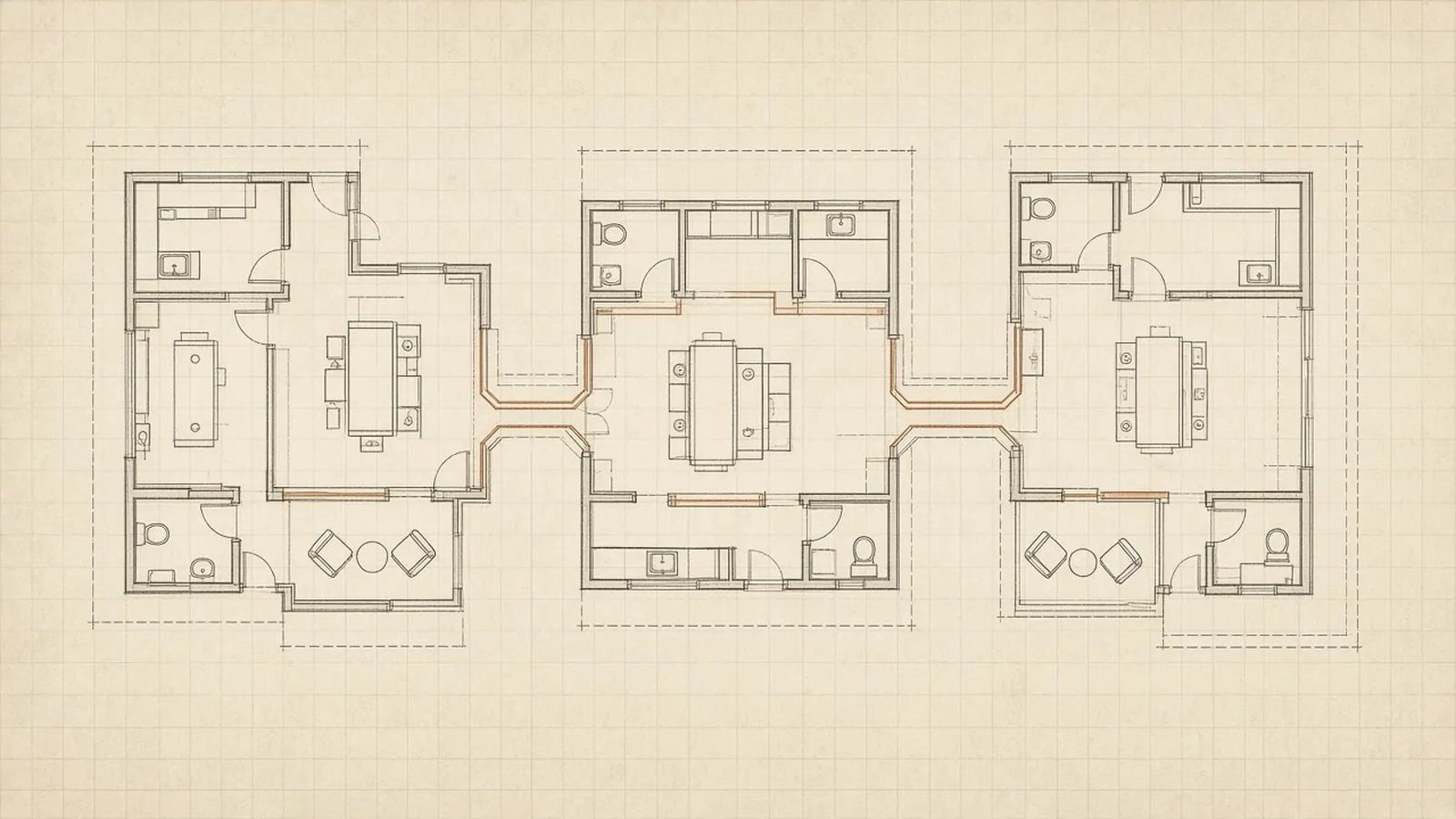
A clinic that works is one of the most tempting things in healthcare. The schedule is full, the team is good, patients are referring their friends, and the obvious next step is to open another one. Then another.
The instinct is right. The timing is where most groups go wrong. A second location doesn't double your capacity. It doubles every unresolved question. Whatever was improvised at the first site gets improvised again, a little differently, at the second, and by the fifth site the organization is running five versions of itself.
I spent more than 20 years building and operating healthcare across more than 20 locations. As sole founder of Lumin Health, LLC, that meant LuminCare's seven urgent care locations, LuminER's five freestanding emergency rooms, Star Medical Center (a surgical hospital), two InMotion physical therapy and rehabilitation locations, and Clearvue Imaging, each a different kind of site with its own operating demands. The most useful lesson from that work is simple to state and hard to practice: design the architecture before you expand it.
We believe no physician group should open another site until the first one runs on paper, not on people. Most groups get this backwards. Here's how we think about the architecture, for physician groups, MSOs and specialty clinic platforms planning growth.
Why multi-site platforms strain
When a single clinic performs well, much of that performance lives in people rather than in the system. A front-desk lead knows every scheduling exception. A practice manager fixes the same billing problem every Thursday. A physician informally coordinates with the imaging center down the street.
Good people compensating for gaps is how many organizations survive their early years. But compensation doesn't copy. When you open a new site, those people can't be in two places, and the knowledge that made site one work never made it into a document, a workflow or a system.
A second location doesn't double your capacity. It doubles every unresolved question.
The symptoms are familiar: different scheduling rules at each location, metrics that can't be compared, new sites that are slow to stabilize, and leaders firefighting instead of deciding.
The fix is not more effort. It's structure, built in the right order.
Follow the dependencies
A durable platform has four layers. Each depends on the one before it, so the order matters.
1. Clinical logic
Start with the care itself. What is the patient journey, from first contact to follow-up? What does the physician workflow look like on a good day and a hard one? Which services does a patient typically need, in what sequence, and where do handoffs happen?
This layer is physician-led by definition. Clinical judgment belongs with clinicians, and the rest of the architecture exists to support it. If a proposed workflow makes sense financially but not clinically, it fails here, before anything else gets built on top of it.
Practically, that means mapping the journey step by step and assigning an owner to every handoff. Any moment where a patient falls between two teams is where design work begins.
2. Operating model
Next, define what it takes to deliver that clinical logic consistently: the people, processes, technology and economics.
- People: roles, staffing models and coverage by site type, not improvised per site.
- Process: intake and scheduling rules, documentation standards, revenue-cycle workflows and escalation paths.
- Technology: the EHR, practice-management, scheduling and reporting tools, configured once and used the same way everywhere.
- Economics: what each site needs to be sustainable, and what assumptions the plan depends on.
The test of an operating model is whether a capable new manager could run a site from it without calling the original team every day.
3. Governance and incentives
Before adding scale, clarify who decides what. Which decisions sit with physicians? Which sit with management or an MSO? How are people paid, and does compensation reward the things the platform actually values, such as quality, patient experience and sound operations? In healthcare, compensation also has a firm boundary: it should never be tied to the volume or value of referrals.
This is also where experienced healthcare counsel belongs, at the table from the start rather than after the structure is already built. Ownership structures, management agreements and any financial relationships between physicians and other entities sit inside a dense legal framework. At a conceptual level, that framework includes the federal Stark Law and Anti-Kickback Statute, Texas laws on referral payments and fee-splitting, and the corporate practice of medicine doctrine, which shapes who may control clinical decisions. This article isn't legal advice, and our position is firm: bring in experienced healthcare counsel early. A design that hasn't been reviewed by experienced healthcare counsel isn't finished.
Culture is revealed here too. Organizations say they value patients, quality and teamwork. What they actually value shows up in how people are paid, what gets rewarded and who is allowed to raise a concern.
4. Scale readiness
Only then ask whether the model is ready to grow. Can it be launched again without the founding team? Will a new site strengthen the platform, or strain it? Is leadership capacity growing as fast as the location count?
Most platforms that struggle skipped a layer or built them out of order: growth before governance, technology before workflow, new service lines before the core patient journey was stable.
Growth isn't the same as strength. Growth can cover up weakness for a while, and then the weakness shows up all at once.
The launch playbook
Once the four layers are in place, the most valuable single artifact a multi-site platform can own is a launch playbook: a sequenced, written plan that takes a new site from decision to first patient and through stabilization.
A good playbook typically covers:
- Site selection criteria: the patient-access, community-need and market factors the platform has decided matter, written down so site choice isn't driven by whichever opportunity appears first.
- Pre-opening sequence: credentialing, payer enrollment, licensing and regulatory steps, technology build, hiring and training, each with an owner and a lead time.
- Opening-week readiness checklist: the go/no-go list reviewed before the doors open.
- Stabilization period: what gets measured weekly in the first months, and what triggers intervention.
- Debrief: what worked, what didn't and what changes in the playbook for the next site.
The debrief is what makes site three easier than site two. Nothing is ever finished; good systems keep improving.
Integration: coordinate what matters
Many multi-site platforms eventually consider vertical integration: bringing imaging, therapy, procedural services or wellness programs inside the system. Done well, integration improves the patient journey. Records move, scheduling is simpler and the physician has better information.
But integration should make care clearer, not more complicated. Before a service comes inside, we ask:
- Why does it belong inside the system rather than with a partner?
- How does it improve the patient journey?
- Do patients keep a real choice of where they receive care?
- Is clinical need, not ownership, driving every referral?
- Is compensation kept completely separate from the volume or value of referrals?
- Has experienced healthcare counsel reviewed the structure, including how any financial relationships are set up?
Integration is where the legal frameworks described above matter most. The questions here are general education, not a substitute for counsel's advice on a specific arrangement.
Build it in, partner or refer out. Choose whichever serves the patient, and be ready to defend the choice.
The best healthcare systems aren't built around owning everything. They're built around coordinating what matters.
Reporting that lets you decide
A multi-site platform needs a dashboard, but not a crowded one. If "new patient" means one thing at one location and something else at another, the comparison is fiction. Keep a short list of measures grouped by question (access, throughput, experience and quality, team, revenue cycle), give each one written definition used everywhere and one owner, and review them on a steady rhythm.
The point of a dashboard isn't to watch. It's to decide.
A readiness check before you expand
If you're planning your next location, a few questions are worth answering honestly first:
- Is the patient journey at your current sites mapped, with an owner for every handoff?
- Could a new manager run a site from your written operating model?
- Are decision rights between physicians, management and any MSO written down and understood?
- Has experienced healthcare counsel reviewed your structure for the next stage of growth?
- Do your sites define their core metrics the same way?
- Do you have a launch playbook, and did you debrief the last launch?
If several answers are "not yet," that isn't a reason to stop growing. It's a reason to build the structure first, so growth strengthens the platform instead of straining it.
The architect's role
I was trained as an engineer before I was trained as a surgeon, and both disciplines taught me the same thing: outcomes are decided by preparation long before the moment of execution. In the operating room, you study the anatomy before you make the first incision. In a healthcare platform, you study the anatomy of the system before you scale it.
That's the work of a healthcare architect. Not designing buildings, but designing how care is organized and delivered, so clinicians can focus on care and the organization can grow with discipline.
Good care is fragile when the system around it is improvised. It doesn't have to be.
Won Health Architects helps physician groups, MSOs, specialty clinic platforms and wellness ventures design physician-led, integrated care platforms. If you're planning growth, start a conversation.
About the author: Sung Won, MD is Founder & Principal of Won Health Architects. A former orthopedic spine surgeon and healthcare founder, he spent more than 20 years building and operating healthcare across more than 20 locations, including as sole founder of Lumin Health, LLC (LuminCare, LuminER, Star Medical Center, InMotion and Clearvue Imaging) and founder of Accel Spine.
This article is general education, not legal, financial or medical advice. Healthcare arrangements are shaped by laws including the federal Stark Law and Anti-Kickback Statute, Texas laws on referral payments and fee-splitting, and the corporate practice of medicine. They are mentioned here only at a conceptual level. Bring in experienced healthcare counsel early, before designing or changing any arrangement. Won Health Architects provides healthcare business strategy and operations consulting.